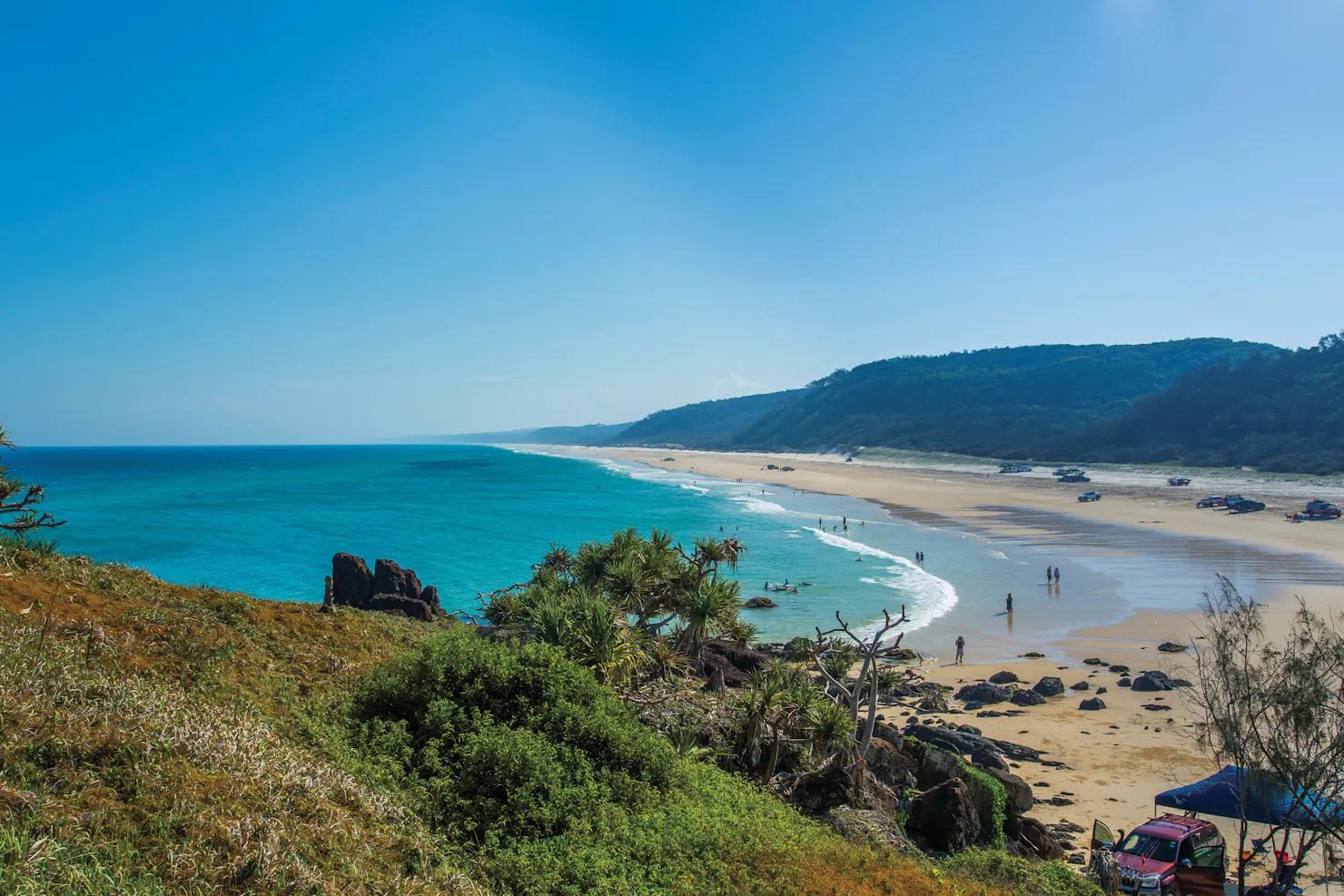
Double Island Point coastal landscape showing sandblow formation

Coastal Southeast Queensland Archaeological Discovery

The Double Island Point Aboriginal Burials

First controlled excavation of Aboriginal burials in southeast Queensland since the 1960s. This comprehensive study examines two burials discovered at Double Island Point, Cooloola National Park, providing crucial insights into traditional Aboriginal burial practices and social organization.

Explore Research

Discovery Location

Double Island Point, Cooloola National Park, Queensland - a significant coastal archaeological site within Kabi Kabi Country.

Burials Discovered

Two Aboriginal burials (Burial 1 and Burial 2) discovered in 1989 through natural erosion exposure and systematic excavation.

Archaeological Significance

First recorded Aboriginal burials for the Cooloola region, providing unique insights into traditional mortuary practices and social organization.

Regional Study

Part of broader research into Holocene settlement patterns and marine-oriented subsistence practices in southeast Queensland.

Cooloola and Kabi Kabi Country

Double Island Point is located within the Cooloola Recreation Area, the northern section of Great Sandy National Park on Queensland's Sunshine Coast. The site lies within Kabi Kabi Country, with native title recognition granted in June 2024, affirming the continuing connection of the Kabi Kabi people to this culturally significant landscape.

The Cooloola Recreation Area extends approximately 61,750 hectares from Noosa North Shore to Rainbow Beach, protecting globally significant coastal dunes, freshwater lakes, and estuarine-marine interfaces. This dynamic coastal environment, with its six-system dune chronosequence, provides the geomorphological context for understanding the archaeological discoveries.

The coastal sandmass records one of the world's longest and most complete dune chronosequences, with active parabolic dunes, volcanic headlands, and offshore pinnacles shaping both ecological habitats and cultural landscapes. The archaeological significance of this region lies in its record of Aboriginal occupation spanning thousands of years.
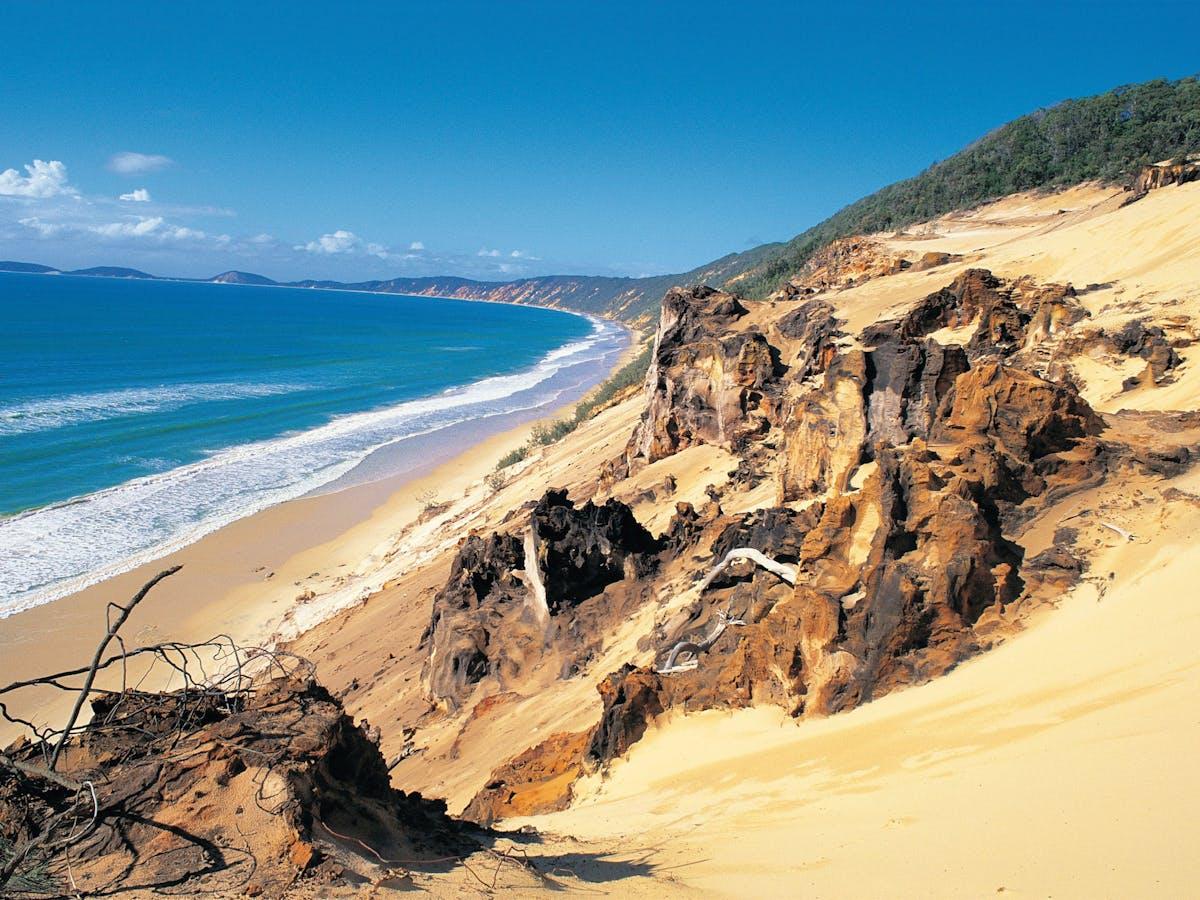
Cooloola National Park coastal dunes showing the distinctive golden sand formations and vegetation typical of the region

Research Context and Archaeological Significance

This research represents the first controlled excavation of Aboriginal burials in southeast Queensland since the 1960s, filling a crucial gap in our understanding of traditional mortuary practices in the region.

The discovery of two burials at Double Island Point provides evidence for the development of marine-oriented peoples in the last 1000 years, offering insights into social organization, burial practices, and the relationship between Aboriginal communities and their coastal environment.

The site, situated on a sandblow with associated shell midden and stone artefact scatter, demonstrates the complex interplay between environmental processes, archaeological preservation, and cultural practices. The research contributes to broader understandings of Aboriginal settlement patterns, subsistence strategies, and social organization during the Holocene period.

Through careful excavation methodology, community consultation with the Thoorgine Educational and Cultural Centre, and respectful analysis, this study provides a foundation for future archaeological research in coastal southeast Queensland while honoring the cultural significance of the discovery.

📄 Access the Original Research

Download the complete academic paper by Ian McNiven that formed the foundation of this website.

📥 Download Original Paper

Available on the References page

Created by MiniMax Agent
×