Chronological Framework
The dating evidence from Double Island Point establishes a chronological framework spanning from pre-contact Aboriginal occupation through the European contact period.
Archaeological Phases and Regional Chronology
The Double Island Point discoveries fit within a broader regional archaeological sequence documenting Aboriginal occupation of coastal southeast Queensland.
Early Phase (c. 5500-2300 cal BP)
Characteristics
- Sandblow artefact sites with stone tool assemblages
- Focus on plant processing and mixed marine-rainforest resources
- Evidence for seasonal occupation and resource mobility
- Stone tool assemblages with specific technological traditions
Regional Sites
- King's Bore - sandblow site with stone tools
- White Cliffs - artefact scatter in active dune system
- Cooloola Sand Patch - stone tool production site
- Fern Gully - diverse artefact assemblage
Environmental Context
- Holocene sea level stabilization
- Development of modern coastal dune systems
- Establishment of present-day plant communities
- Expansion of marine resource exploitation
Recent Phase (last ~900-100 years)
Characteristics
- Dominance of shell midden formation
- Increased sedentism and resource intensification
- Development of more complex social organization
- Evidence for larger residential groups
Shell Midden Evidence
- Teewah Beach - extensive midden systems
- Double Island Point - midden-burial associations
- Regional pattern of coastal resource exploitation
- Integration of burial practices with domestic activities
Social Organization
- Development of residential group territories
- Evidence for corporate group identity
- Communal burial ground development
- Cultural transmission and tradition maintenance
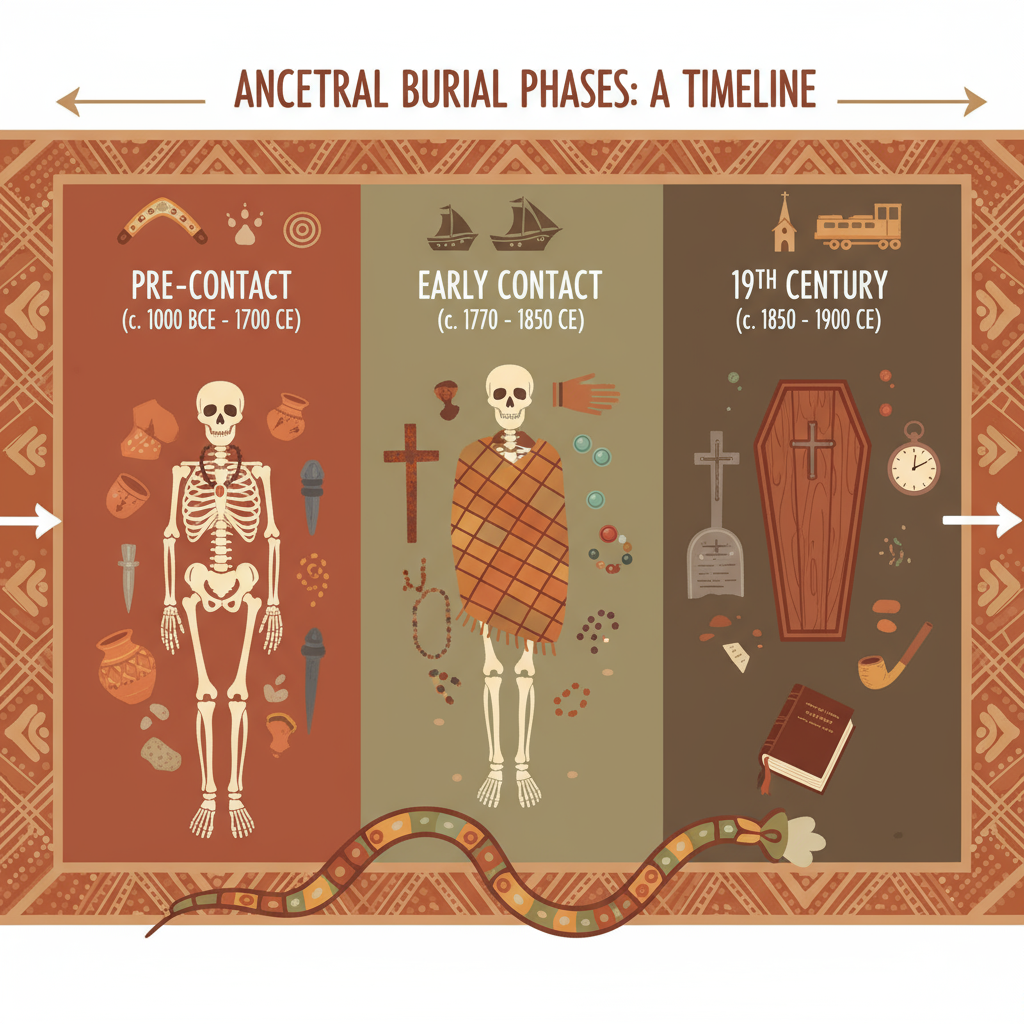
Archaeological timeline visualization showing the chronological framework for regional occupation patterns
Stratigraphic Evidence and Site Formation
Detailed stratigraphic analysis provides crucial evidence for understanding the relationship between burials and their archaeological context.
Relationship to Shell Midden Layers
Both burials occur within contexts associated with shell midden deposits:
- Burial 1 Context: Pre-midden burial indicating early occupation of the area
- Burial 2 Context: Integration with midden deposits suggesting later occupation
- Stratigraphic Sequence: Clear relationships between burial events and cultural deposits
- Temporal Gap: Evidence for multiple phases of site occupation
Evidence for Sequential Burial Practices
Stratigraphic evidence indicates:
- Separate Burial Events: Two distinct burial episodes at different times
- Site Continuity: Continued use of location for burial purposes
- Cultural Maintenance: Traditional practices maintained across temporal gap
- Site Significance: Repeated selection of location for burial purposes
Environmental Preservation Factors
The coastal environment influenced preservation:
- Burial Context Protection: Sand burial provided some protection
- Exposure Risk: Wind erosion eventually exposed remains
- Preservation Variation: Different burial contexts produced different preservation states
- Natural Processes: Site formation through natural dune dynamics
Dating Reliability and Confidence
The dating evidence provides:
- Relative Dating: Clear stratigraphic relationships between deposits
- Material Culture Dating: European materials providing chronological markers
- Regional Correlation: Alignment with broader regional sequences
- Archaeological Context: Integration with established cultural chronologies
Regional Chronology and Dating Evidence
Comparative dating evidence from regional archaeological sites provides context for understanding the Double Island Point discoveries.
Site Ages and Cultural Phases
Regional archaeological sites demonstrate chronological patterns:
| Site | Location | Age Range | Archaeological Evidence | Cultural Phase |
|---|---|---|---|---|
| King's Bore | Cooloola Sandblow | c. 5500-2300 cal BP | Stone artefacts, plant processing tools | Early Phase |
| Teewah Beach | Coastal Shell Middens | last ~900-100 years | Extensive shell midden systems | Recent Phase |
| Tin Can Bay | Coastal Dunes | c. 3000-1500 cal BP | Stone tools, marine resources | Early Phase |
| Double Island Point | Sandblow + Shell Midden | 200-900 BP & 19th century | Burials with artefacts | Transition Phase |
| Broadbeach | Coastal Burial Ground | c. 2000-500 BP | Communal burials, stone arrangements | Recent Phase |
Chronological Implications
The regional chronology demonstrates:
- Long-term Occupation: Continuous Aboriginal presence in coastal environments
- Cultural Evolution: Development of more complex social organization
- Environmental Adaptation: Successful adaptation to changing coastal conditions
- Resource Intensification: Development of systematic exploitation strategies
- Cultural Continuity: Maintenance of traditions while adapting to change
Double Island Point in Regional Context
The burial discoveries contribute to understanding:
- Mortuary Practices: Evidence for traditional burial customs in coastal contexts
- Social Organization: Individual burial practices within broader settlement patterns
- Cultural Contact: Evidence for interaction during European contact period
- Temporal Continuity: Maintenance of cultural practices across centuries
- Environmental Relationship: Integration of burial practices with coastal environments
Dating Methods and Chronological Evidence
Multiple dating approaches provide complementary evidence for establishing the chronological framework of the Double Island Point discoveries.
Material Culture Dating
The most direct dating evidence comes from associated materials:
Burial 2 - European Contact Period
- Brass Safety Pin: Introduced to Australia during European settlement period
- Historical Context: European materials become common after 1820s
- Specific Dating: Safety pin styles allow more precise dating within 19th century
- Cultural Significance: Evidence for Aboriginal-European cultural interaction
Regional Comparisons
- Shell Midden Dating: Correlation with dated regional midden sequences
- Stone Tool Sequences: Typological analysis of stone artefact assemblages
- Stratigraphic Relationships: Relative dating through layer analysis
- Environmental Context: Correlation with coastal dune formation sequences
Stratigraphic Dating
Layer relationships provide relative dating evidence:
- Pre-midden Position: Burial 1 occurs below midden deposits
- Post-midden Integration: Burial 2 incorporated into midden fill
- Sediment Analysis: Dating of natural layers through environmental analysis
- Site Formation: Understanding of dune dynamics and burial processes
Comparative Regional Dating
Correlations with other regional sites:
- Holocene Sequences: Integration with established regional chronologies
- Cultural Phase Dating: Assignment to Early and Recent archaeological phases
- Environmental Correlation: Dating through coastal environmental changes
- Anthropological Context: Integration with Aboriginal cultural chronologies
Chronological Confidence
The dating evidence provides:
- High Confidence: European materials provide secure 19th century dating
- Good Confidence: Pre-midden position indicates pre-contact period
- Regional Validation: Alignment with established regional sequences
- Cultural Context: Integration with Aboriginal cultural chronologies
Temporal Patterns and Cultural Change
The chronological framework reveals patterns of cultural continuity and change spanning over a millennium of Aboriginal occupation of the Cooloola coast.
Pre-contact Period (200-900 years BP)
Evidence from Burial 1 and associated materials indicates:
- Traditional Practices: Maintenance of traditional burial customs
- Subsistence Patterns: Continued reliance on marine resources
- Social Organization: Evidence for individual burial rather than communal cemetery
- Material Culture: Traditional stone tool and shell working practices
- Environmental Adaptation: Successful adaptation to coastal dune environments
Contact Period (19th century)
Evidence from Burial 2 demonstrates:
- Cultural Synthesis: Combination of traditional and European elements
- Material Culture Change: Adoption of European goods while maintaining traditions
- Burial Practices: Continuity of traditional methods with new materials
- Social Adaptation: Evidence for cultural adaptation during contact period
- Coastal Connection: Continued relationship with coastal environments
Regional Implications
The temporal patterns contribute to understanding:
- Cultural Continuity: Maintenance of core traditions across temporal changes
- Adaptive Capacity: Successful adaptation to environmental and cultural change
- Social Organization: Evolution of settlement and burial patterns
- Cultural Identity: Preservation of Aboriginal cultural identity
- Historical Process: Evidence for the nature of Aboriginal-European interaction