Kabi Kabi Country and Native Title Recognition
Double Island Point lies within Kabi Kabi Country, with formal native title recognition granted in June 2024, affirming the continuing connection of the Kabi Kabi people to this culturally significant landscape.
The native title determination for Kabi Kabi people covers a substantial area of the Sunshine Coast, including parts of the Cooloola coast. This legal recognition affirms non-exclusive rights that include access, movement, and the right to take resources for any purpose, subject to applicable laws.
Cultural Landscape Values
The Cooloola region represents a living cultural landscape where Traditional Owners maintain continuing connections through:
- Specific Plants: Traditional use of banksia nectar and other coastal flora
- Marine Resources: Continued access to estuarine and marine resources
- Freshwater Springs: Recognition of water sources as culturally significant places
- Sandblow Sites: Cultural and story connections to active dune formations
- Headland Places: Significance of prominent coastal landmarks
Co-management Framework
Native title recognition establishes a framework for:
- Joint management of cultural heritage sites
- Collaborative decision-making regarding research and protection
- Integration of Traditional Owner knowledge with scientific research
- Respect for cultural protocols in all archaeological investigations
- Community-controlled interpretation and presentation of cultural heritage
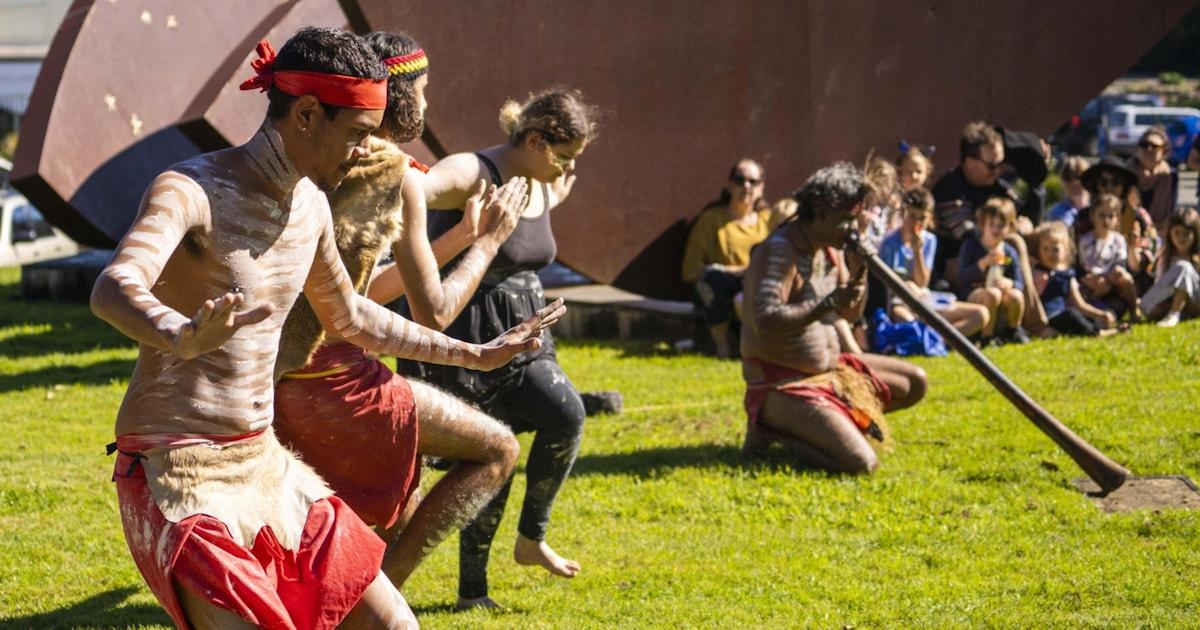
Kabi Kabi cultural performance demonstrating ongoing traditional practices and connection to country
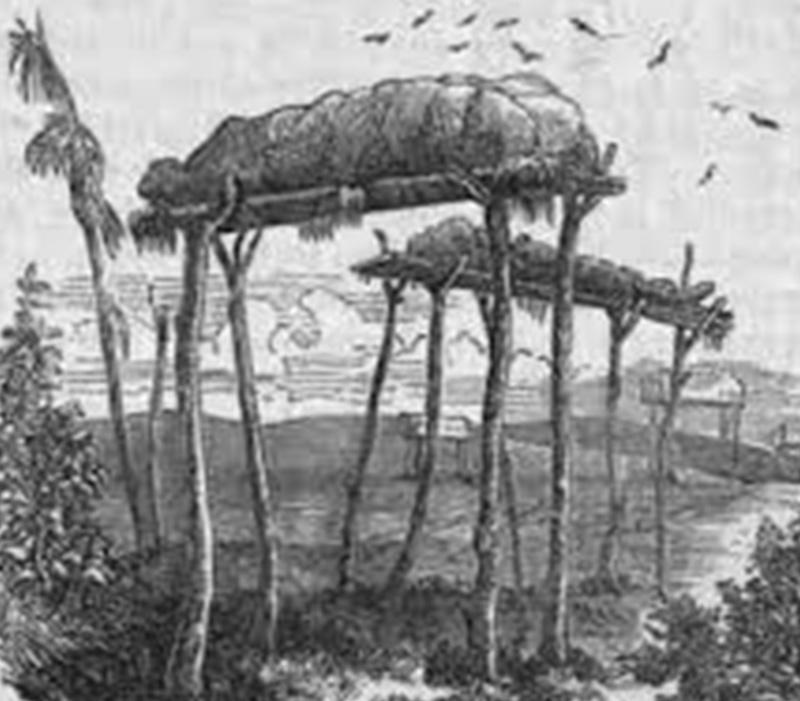
Historical illustration depicting traditional Aboriginal burial practices in coastal environments
Traditional Aboriginal Burial Practices
Traditional Aboriginal mortuary practices in southeast Queensland were diverse and responsive to ecological and social contexts, reflecting deep cultural values and environmental adaptation.
Mortuary Method Typology
Traditional burial methods included several distinct approaches:
Primary Burial (Inhumation)
- Supine or semi-flexed body positioning
- Orientation varying by local cultural traditions
- Use of materials such as bark coffins and matting
- Stones placed on chest and other grave goods
- Integration with existing landscape features
Cremation Practices
- Sitting position on pyre construction
- Covering with branches and grass
- Use of appropriate fuel materials
- Occasional association with stone arrangements
- Long-term practice with deep cultural significance
Secondary Burial/Bundle Practices
- Bone recovery following decomposition
- Preparation of bone bundles in cultural materials
- Use of bark and matting wrapping
- Cordage and cylinder coffin traditions
- Multi-stage mortuary ceremonies
Body Treatment and Positioning
Archaeological and ethnographic evidence demonstrates careful attention to:
- Body Position: Flexed positioning typical of Aboriginal burial traditions
- Orientation: Careful alignment reflecting cosmological understanding
- Materials: Appropriate grave goods reflecting status and identity
- Location: Selection of meaningful landscape positions
Cultural Significance of Burial Location
The location of burials within coastal dune environments reflects both practical affordances and deep cultural meanings embedded in Aboriginal understanding of landscape.
Coastal Dune Environments
Coastal sand dunes offered significant advantages for Aboriginal burial practices:
- Practical Affordances: Soft substrates facilitating excavation and burial construction
- Drainage Properties: Well-drained environments promoting preservation
- Visibility: Landmarks providing cultural significance and geographic reference
- Accessibility: Proximity to resource areas and settlement patterns
Shell Midden Associations
The integration of burials with shell midden deposits reflects:
- Cultural Landscape: Shell middens as significant cultural places
- Social Organization: Connection between daily life and mortuary practices
- Seasonal Patterns: Burial location choice reflecting settlement mobility
- Resource Integration: Association between subsistence areas and burial places
Headland and Landmark Significance
Prominent coastal features held cultural meanings:
- Sea-Country Relationships: Connection between burial places and maritime resources
- Cultural Geography: Integration of burial locations with story places
- Visibility and Orientation: Use of landmarks for cultural navigation
- Environmental Knowledge: Understanding of coastal dynamics and change
Place-Based Meanings
Traditional understanding of landscape included:
- Living Landscape: Places as active participants in cultural practice
- Memory and Story: Burial locations as anchors for cultural memory
- Seasonal Cycles: Connection between burial practices and environmental rhythms
- Intergenerational Connections: Burial places linking past, present, and future
Regional Comparisons and Cultural Diversity
The Double Island Point discoveries contribute to understanding regional variation in Aboriginal burial practices throughout southeast Queensland.
Comparison with Broadbeach Aboriginal Burial Ground
Comparisons with other regional burial sites reveal both continuity and variation:
Broadbeach Characteristics
- Large communal burial ground
- Predominantly flexed burial position
- Multiple individuals in single contexts
- Stone arrangements and cultural materials
- Clear evidence of social organization
Double Island Point Characteristics
- Individual burial contexts
- Semi-flexed positioning with variations
- Single individuals per burial
- Integration with domestic activities
- Evidence for residential mobility patterns
Cultural Diversity in Southeast Queensland
Regional variation reflects:
- Local Environmental Conditions: Adaptation to specific coastal and inland environments
- Social Organization Differences: Variations in group size and structure
- Cultural Traditions: Local variations in burial practices and beliefs
- Temporal Change: Evolution of practices through time
- Resource Strategies: Adaptation to different subsistence patterns
Burial Orientation Variations
Analysis of burial orientations reveals:
- Local Cultural Preferences: Different orientation practices by region
- Individual Variation: Personal choice or status factors
- Environmental Constraints: Landscape features influencing burial design
- Temporal Change: Evolution of orientation practices through time
Social Organization and Cultural Change
The Double Island Point burial discoveries provide evidence for understanding social organization changes during the Holocene period in southeast Queensland.
Development of Residential Groups
Evidence suggests development of more structured residential groups during the last 1000 years:
- Increased Sedentism: Evidence for more permanent occupation of coastal sites
- Resource intensification: Development of more systematic exploitation strategies
- Storage and Processing: Evidence for food storage and preparation techniques
- Territorial Organization: Development of clearer boundaries and resource rights
Corporate Group Identity
Burial evidence suggests development of stronger group identity:
- Shared Burial Grounds: Evidence for communal burial places in some contexts
- Grave Goods: Material culture reflecting individual and group identity
- Status Differentiation: Evidence for social ranking and status differences
- Cultural Transmission: Maintenance of traditions through generations
Communal Burial Ground Development
Regional evidence suggests evolution toward more communal approaches:
- Broadbeach Model: Large communal cemetery with multiple burials
- Individual Contexts: Double Island Point showing individual burial emphasis
- Hybrid Practices: Combination of individual and communal approaches
- Cultural Transmission: Maintenance of local variations within broader patterns
Implications for Understanding Aboriginal Society
The burial evidence contributes to understanding:
- Social Complexity: Evidence for sophisticated social organization
- Cultural Continuity: Maintenance of traditions while adapting to change
- Regional Variation: Local diversity within broader cultural patterns
- Environmental Adaptation: Successful adaptation to coastal environments
- Cultural Contact: Evidence for interaction and change during European contact
Contemporary Cultural Significance
The Double Island Point burial discoveries hold contemporary significance for Aboriginal communities, archaeological research, and cultural heritage management.
Living Cultural Heritage
For Kabi Kabi people and other Aboriginal communities:
- Connection to Ancestors: Physical evidence of ancestral presence in country
- Cultural Validation: Archaeological confirmation of traditional practices
- Educational Value: Resources for teaching about Aboriginal history
- Cultural Pride: Evidence for sophisticated traditional practices
- Rights Recognition: Support for native title and cultural rights claims
Research and Education
Significance for archaeological research and public education:
- Archaeological Knowledge: Insights into traditional Aboriginal lifeways
- Methodological Standards: Models for respectful archaeological practice
- Public Understanding: Education about Aboriginal cultural heritage
- Scientific Research: Opportunities for bioarchaeological and environmental studies
- Conservation Training: Models for protecting vulnerable sites
Cultural Heritage Management
Implications for contemporary heritage management:
- Community Consultation: Models for respectful community engagement
- Scientific Collaboration: Integration of scientific and cultural perspectives
- Site Protection: Strategies for protecting coastal archaeological sites
- Policy Development: Guidelines for managing similar discoveries
- Long-term Planning: Sustainable approaches to heritage conservation
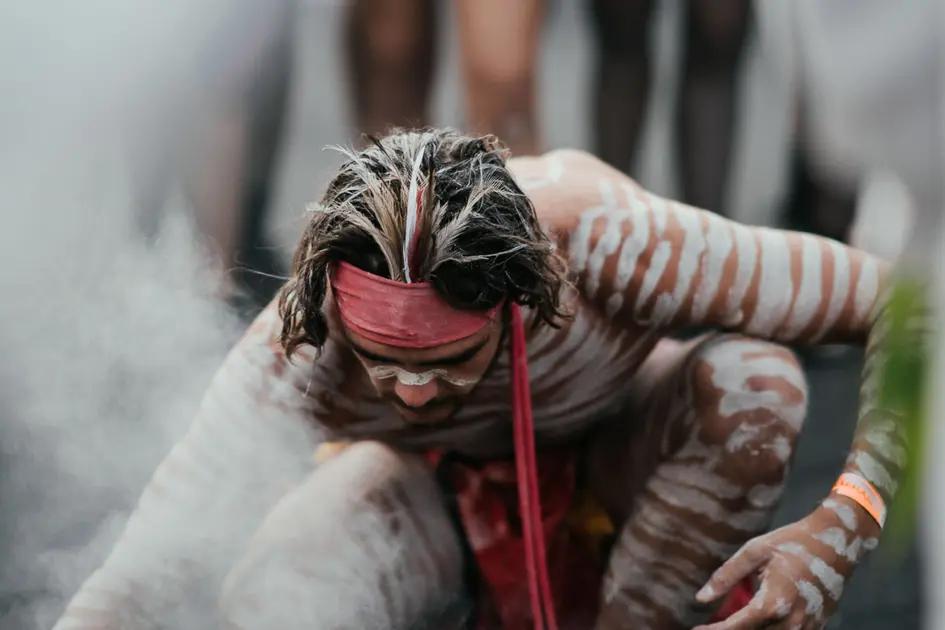
Traditional Aboriginal ceremony demonstrating ongoing cultural practices and spiritual connections