Burial 1 - Physical Description
Identification: Male, small middle-aged individual
Preservation: Poor preservation with very friable bones requiring immediate stabilization
Body Position and Orientation
- Primary burial positioning with fragmented remains scattered over 1m × 2m area
- Body positioned on back with head tilted toward left side
- Semi-flexed legs indicating traditional burial practice
- Orientation: Northwest to Southeast alignment
Skeleton Condition
- Fragmented bone elements showing evidence of environmental exposure
- Very friable condition due to coastal environmental factors
- Limited diagnostic elements available for detailed analysis
- Evidence of original anatomical positioning despite fragmentation
Demographic Assessment
Age estimation based on available bone elements suggests middle-aged adult male. The small stature may reflect genetic factors, nutritional patterns, or environmental conditions during growth and development.
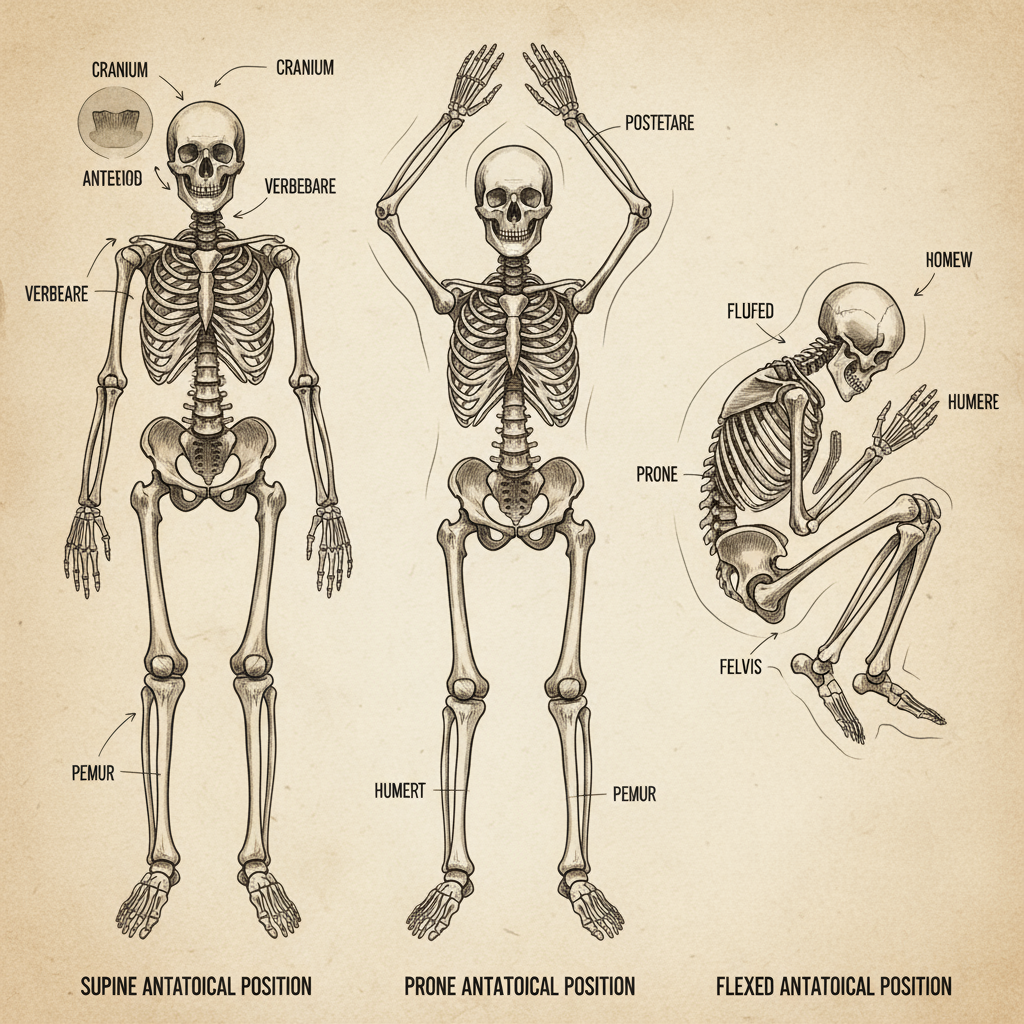
Archaeological diagram illustrating burial position and associated archaeological materials
Burial 1 - Associated Artifacts and Materials
Several artifacts were found in direct association with Burial 1, providing insights into burial practices and cultural traditions.
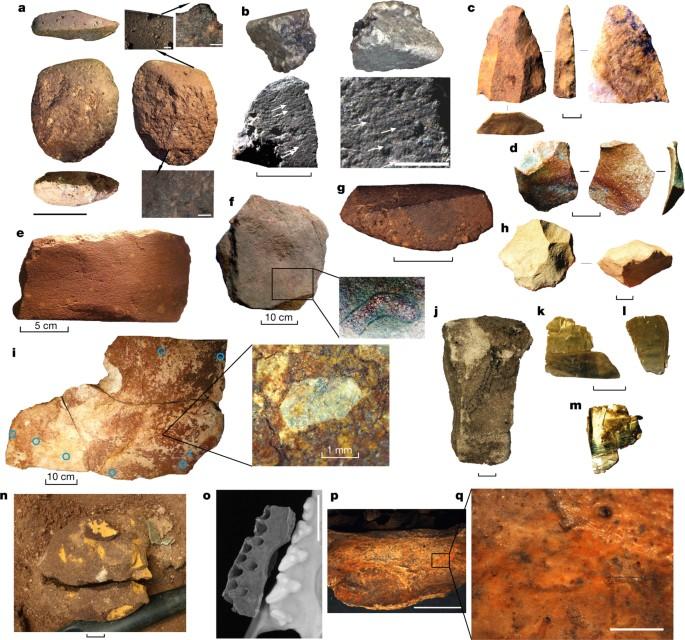
Artifact Categories
Two main categories of artifacts were associated with Burial 1:
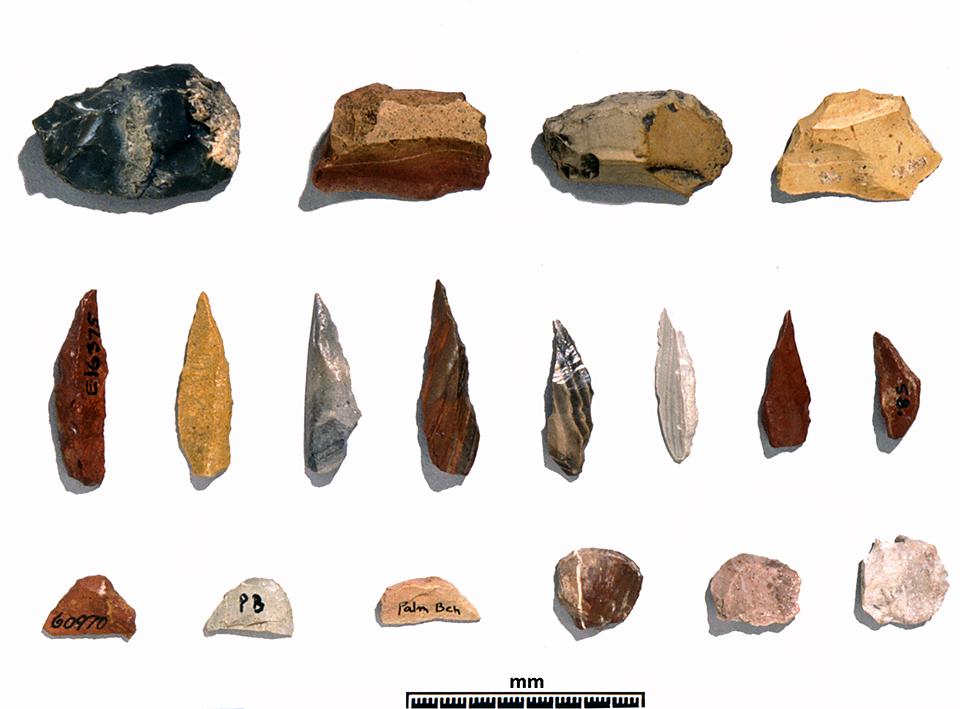
Andesite Flaked Artefacts
- Stone tools manufactured from andesite raw material
- Flaked stone technology indicating sophisticated tool production
- Direct spatial association with skeletal remains
- Possible indication of status, occupation, or functional significance
Marine Shell Remains
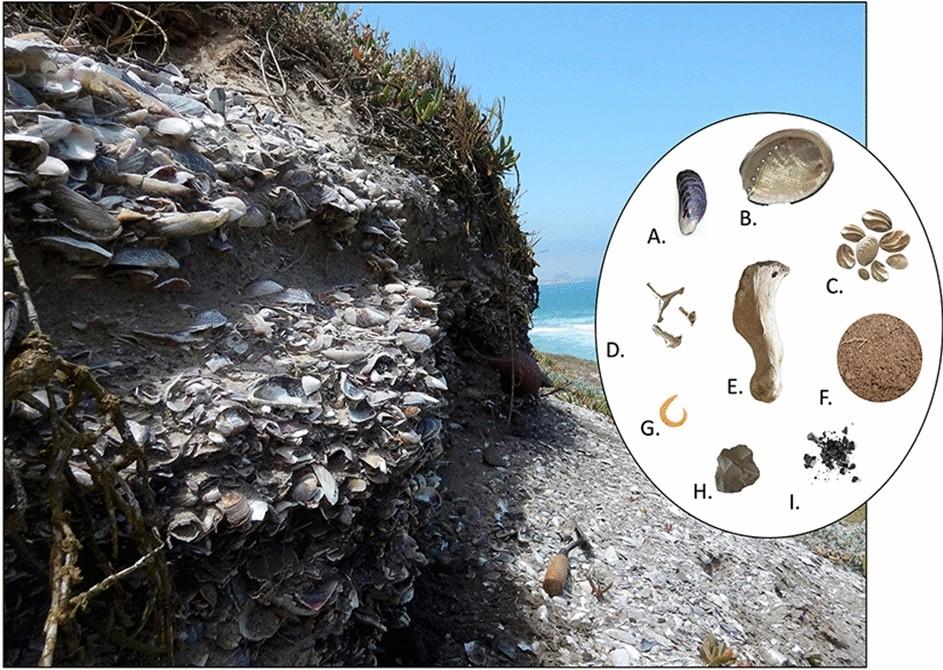
- Pipi shells (Plebidonax deltoides) - significant for Aboriginal diet
- Thais shells representing coastal resource exploitation
- Spatially associated with burial remains
- Evidence of coastal subsistence practices and ceremonial use
Cultural Significance of Associated Materials
The association of stone tools and marine shells with the burial provides evidence for:
- Traditional burial practices including grave goods
- Connection to coastal resource procurement and processing
- Individual status or occupation reflected in grave goods
- Cultural continuity in burial practices across generations
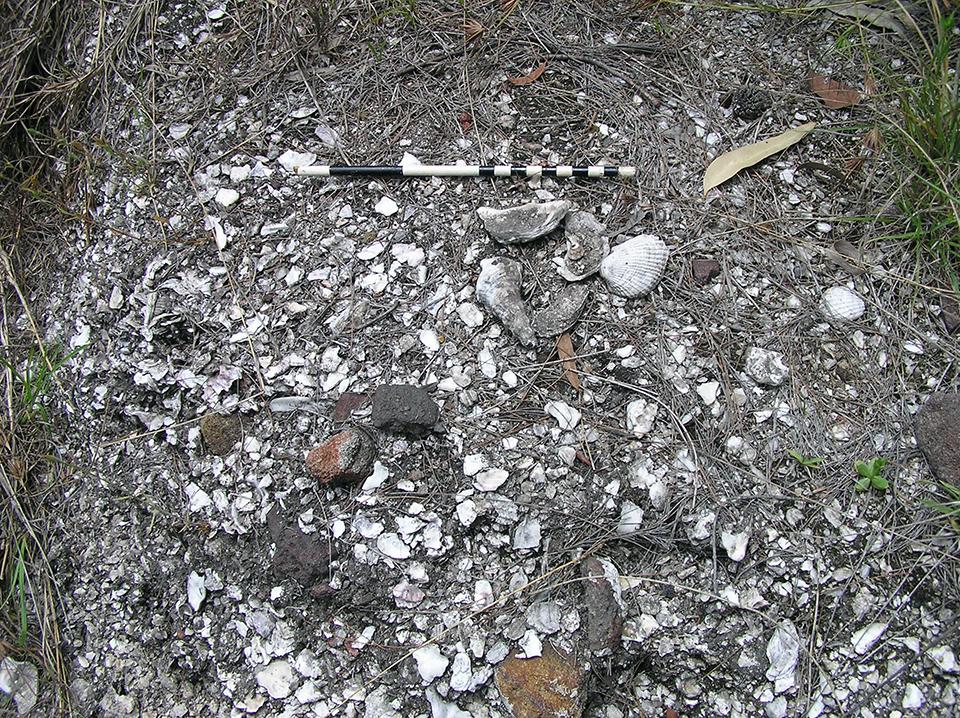
Shell midden context showing stratified archaeological deposits in coastal environment
Burial 2 - Physical Description
Identification: Female, small young woman
Preservation: Fair preservation with moderate de-calcification allowing for detailed analysis
Complete Skeleton Documentation
- Complete skeleton preserved in correct anatomical position
- Exceptionally well-preserved for coastal archaeological context
- Minimal post-depositional disturbance
- Excellent opportunities for demographic and pathological analysis
Body Position and Orientation
- Body positioned on back with leaning toward right side
- Semi-flexed legs characteristic of Aboriginal burial traditions
- Orientation: East-southeast to West-northwest alignment
- Different orientation from Burial 1 indicating possible temporal or cultural variation
Unique Burial Features
- Brass safety pin located on right chest region
- Evidence of post-contact burial practices
- Combination of traditional and European-influenced burial elements
- Indicates burial during or after European contact period
Burial 2 - Burial Context and Associated Materials
Burial 2 demonstrated a different burial context, incorporating burial pit fill with midden deposits and containing European contact period materials.
Burial Pit Construction
The burial pit showed evidence of:
- Pit Design: Carefully constructed burial pit accommodating complete remains
- Fill Materials: Incorporation of local shell midden deposits as backfill
- Stratigraphic Context: Relationship to natural sediment layers and cultural deposits
- Preservation Factors: Protection from environmental exposure and disturbance
Associated Archaeological Materials
Materials recovered from burial fill included:
Shell Remains
- Various marine shell species in burial pit fill
- Evidence of prehistoric shellfish exploitation
- Integration of domestic waste with burial construction
- Connection to broader coastal subsistence patterns
Stone Artefacts
- Flaked stone tools and debitage in fill materials
- Stone tool production evidence from burial context
- Association with broader archaeological assemblage
- Evidence for continued traditional practices during contact period
European Contact Evidence
The brass safety pin provides crucial dating and cultural context:
- Dating Indicator: Brass safety pins introduced to Australia during European settlement
- Historical Context: Indicates burial during or after European contact (post-1820s)
- Cultural Synthesis: Evidence of Aboriginal-European cultural interaction in burial practices
- Social Change: Reflects changing material culture during contact period
Comparative Analysis: Two Burials, Different Contexts
The comparison between Burial 1 and Burial 2 reveals significant temporal, cultural, and environmental differences reflecting broader patterns of Aboriginal burial practices.
Burial 1 Characteristics
- Age: 200-900 years before present
- Sex: Male, middle-aged
- Preservation: Poor, fragmented
- Orientation: Northwest-Southeast
- Associated Materials: Stone tools, marine shells
- Cultural Context: Pre-contact traditional practices
- Environmental Exposure: Long-term weathering and erosion
Burial 2 Characteristics
- Age: Mid-to-late 19th century
- Sex: Female, young adult
- Preservation: Fair, relatively complete
- Orientation: East-southeast to West-northwest
- Associated Materials: European brass pin, shells, stones
- Cultural Context: Contact period with European influence
- Environmental Protection: Better preservation in burial pit
Archaeological Significance of Variations
The differences between the two burials demonstrate:
- Temporal Continuity: Core burial practices maintained over centuries
- Cultural Adaptation: Incorporation of new materials while preserving traditions
- Environmental Factors: Preservation variation due to burial context and site formation
- Social Organization: Individual burial rather than communal cemetery
- Regional Variation: Different orientation preferences within local cultural patterns
Shell Midden Context
Both burials occurred in contexts associated with shell midden deposits:
- Integration of burial practices with coastal resource exploitation
- Shell middens as significant cultural landscape features
- Evidence for residential mobility and seasonal occupation patterns
- Connection between daily subsistence activities and mortuary practices
Research Implications and Future Analysis
The burial discoveries at Double Island Point provide unique opportunities for understanding Aboriginal mortuary practices, social organization, and environmental adaptation in coastal Queensland.
Anthropological Insights
The analysis of the two burials contributes to understanding:
- Mortuary Practices: Traditional burial methods and their environmental contexts
- Social Identity: Evidence for individual burial rather than communal cemetery use
- Cultural Continuity: Maintenance of traditional practices through temporal changes
- Cultural Contact: Evidence for Aboriginal-European interaction in burial contexts
- Gender and Age: Variations in burial treatment by demographic factors
Environmental Archaeology
The burial contexts contribute to understanding:
- Coastal Adaptation: Settlement patterns and resource utilization strategies
- Site Formation: Natural and cultural processes affecting archaeological preservation
- Climate Change: Environmental factors influencing burial preservation and discovery
- Sea-level Change: Impact of coastal dynamics on archaeological sites
Future Research Directions
Potential for continued analysis includes:
- Bioarchaeological Analysis: Detailed study of health, diet, and lifestyle indicators
- Stable Isotope Analysis: Investigation of dietary patterns and mobility
- DNA Analysis: Genetic relationships and population structure (if culturally appropriate)
- Comparative Regional Studies: Contextualization within broader Aboriginal burial patterns
- Ethnographic Research: Community-based research with Traditional Owners
Cultural Heritage Management
The burial discoveries have implications for:
- Site Protection: Long-term management of archaeological sites in coastal environments
- Community Consultation: Models for respectful research and community involvement
- Educational Value: Understanding Aboriginal cultural heritage and history
- Conservation Planning: Strategies for protecting vulnerable coastal archaeological sites